
shoulder dislocation in Udaipur

Shoulder Dislocation
The shoulder is the most mobile joint in the human body, which also makes it the most commonly dislocated joint.
A shoulder dislocation occurs when the ball of the upper arm bone (humerus) comes out of the socket of the shoulder blade (glenoid).
Most dislocations are anterior dislocations, usually caused by:
• Sports injuries
• Falls on an outstretched arm
• Road traffic accidents
• Sudden twisting injuries
If the injury damages the labrum, ligaments, or bone, the shoulder may become unstable and dislocate repeatedly.
Types of Shoulder Dislocation
1. Anterior Dislocation
- Most common type
- The humerus moves forward out of the socket
2. Posterior Dislocation
- Less common.
- The humerus moves backward, often caused by seizures or
electric shocks.
3. Inferior Dislocation
- Rare
- The humerus moves downward, typically following severe
trauma.
Symptoms
You may experience:
✔ Severe shoulder pain
✔ Visible deformity of the shoulder
✔ Inability to move the arm
✔ Swelling or bruising
✔ Feeling that the shoulder “slips out” repeatedly
✔ Weakness during overhead movement
 Important:
Even if the shoulder goes back into place, the internal stabilizing structures may remain damaged.
Causes
- Trauma: Accidents, falls, or direct blows during sports.
- Sports Injuries: Activities involving overhead movements like
swimming, tennis, or throwing. - Genetic Factors: Some individuals have more flexible joints,
increasing the risk of dislocation.
Why Recurrent Shoulder Dislocation Happens
After the first dislocation, the shoulder often develops structural damage such as:
Bankart Lesion
Tear of the labrum from the glenoid.Hill-Sachs Lesion
Indentation fracture in the humeral head.Capsular Laxity
Loose ligaments leading to instability.Young and active patients have up to 80–90% risk of recurrence after the first dislocation.
Advanced Treatment Options
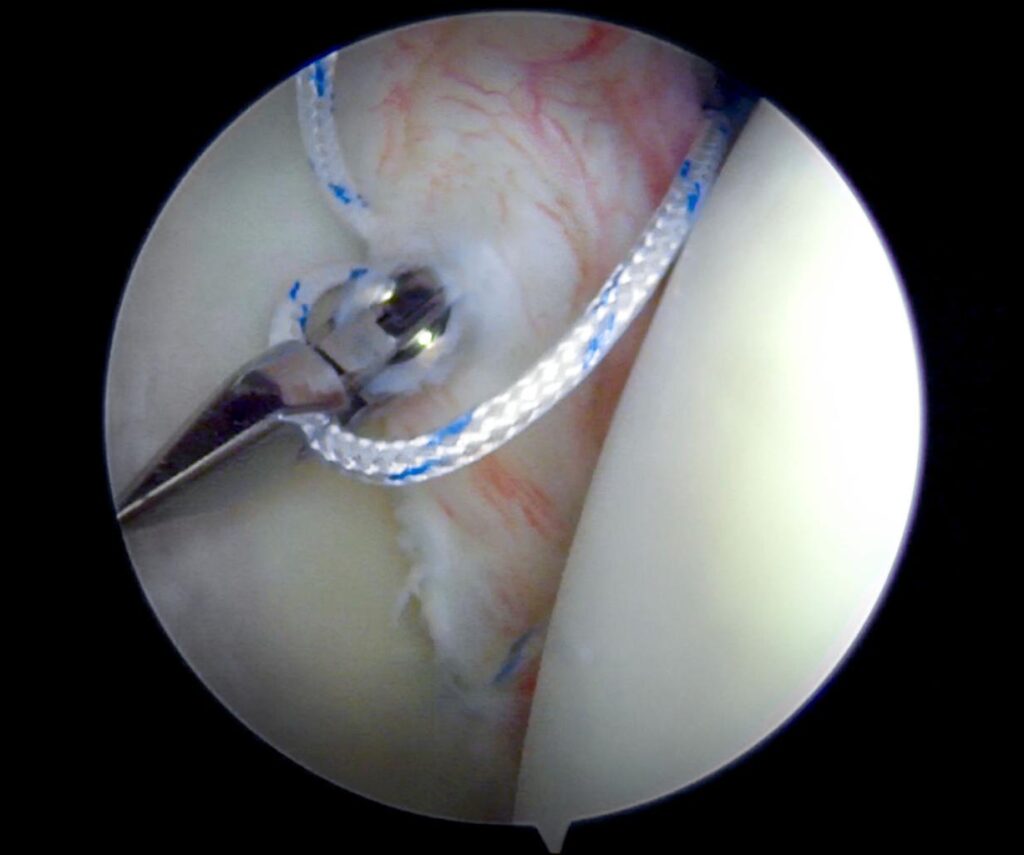
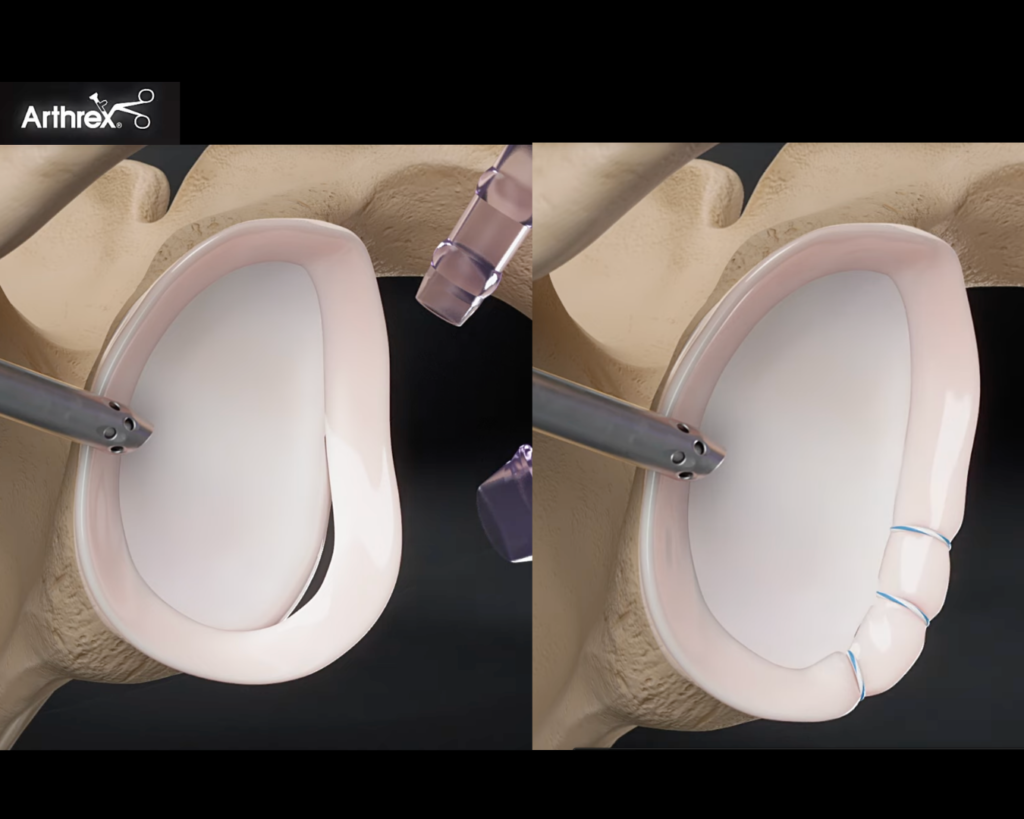
For recurrent dislocation, keyhole arthroscopic surgery is often the best treatment.
The procedure involves:
• Repairing the torn labrum (Bankart repair)
• Tightening the shoulder capsule
• Fixing instability using suture anchorsAdvantages
✔ Minimally invasive surgery
✔ Small incisions
✔ Faster recovery
✔ Better joint stability
✔ Early return to sports
Diagnosis
A shoulder dislocation is typically diagnosed through:
- Physical Examination: Assessing the range of motion and visible deformity.
- Imaging Tests:
- X-rays: To confirm dislocation and check for fractures
- MRI or CT scans: To evaluate soft tissue damage, such as labral tears or ligament injuries.
Why Choose Dr. Gaurav Jain?
Dr. Gaurav Jain is one of the leading shoulder surgeons in Rajasthan specializing in arthroscopic shoulder surgery and sports injuries.
Expertise
✔ Western fellowship-trained shoulder surgeon
✔ Over 5000+ successful orthopaedic surgeries
✔ Specialist in arthroscopic shoulder stabilization
✔ Expertise in rotator cuff repair, Bankart repair and shoulder replacement
✔ Advanced surgical techniques including HoloLens assisted surgery📍 Consultant Shoulder & Knee Surgeon
PIMS City Hospital, Meera Nagar, Udaipur
Treatment Options:
Initial Management
- Immediate immobilization using a sling.
- Ice application to reduce swelling.
Reduction
- A medical procedure where the dislocated joint is gently maneuvered back into place.
- Performed under sedation or anesthesia to minimize discomfort.
Rehabilitation
- Physical therapy to restore strength and mobility.
- Focus on strengthening the rotator cuff and stabilizing muscles.
Surgical Intervention
- Recommended for recurrent dislocations or associated injuries, such as labral tears.
- Procedures like Bankart repair or Latarjet surgery are commonly performed.
Prevention
Strengthening shoulder and upper back muscles.
Avoiding high-risk activities if prone to dislocations.
Using protective gear during sports.
Why to Choose Us
Expertise in advanced arthroscopic shoulder surgeries.
Access to Hololens-enabled virtual reality-assisted
procedures for precision.
Comprehensive care, from diagnosis to rehabilitation.
Affordable treatment plans without compromising on quality.
Contact Us
If you or a loved one is experiencing symptoms of shoulder dislocation, don’t wait. Schedule an appointment with Dr. Gaurav Jain, an expert in shoulder care, and take the first step toward recovery.